Technology
The History of the MacBook: A Journey Through Innovation
The MacBook’s history is a testament to Apple’s relentless pursuit of innovation.
2 views

Somana
The History of the MacBook: A Journey Through Innovation
Apple’s MacBook series is one of the most iconic and influential product lines in the world of computing. Known for its sleek design, powerful performance, and seamless integration with Apple’s ecosystem, the MacBook has set industry standards since its introduction. Let’s explore the evolution of the MacBook, from its origins to its current status as a flagship in Apple’s product lineup.
The Early Days: Pre-MacBook Era
Before the MacBook, Apple had already made its mark with portable computing. The PowerBook series, launched in 1991, and later the iBook, introduced the world to Apple’s vision for laptops. These devices laid the groundwork for what would eventually become the MacBook, with their emphasis on usability and innovation.
By the early 2000s, Apple was ready to revolutionize its laptop offerings, combining the strengths of its existing devices into a more streamlined product.
2006: The Birth of the MacBook
In May 2006, Apple introduced the first MacBook, replacing the iBook and PowerBook lines. The original MacBook was aimed at the consumer market, featuring:
• Intel Processors: A major shift as Apple transitioned from PowerPC chips to Intel, making the MacBook faster and more compatible with popular software.
• Design: A polycarbonate body available in white and black, showcasing Apple’s minimalist aesthetic.
• Display: A 13.3-inch glossy widescreen that set a standard for portable laptops.
The MacBook quickly became a favorite for students, professionals, and creatives due to its affordability compared to Apple’s premium MacBook Pro line.
2008: MacBook Air – Redefining Portability
In January 2008, Apple unveiled the MacBook Air, the thinnest laptop in the world at the time. Steve Jobs famously removed it from an envelope during its debut, showcasing its unparalleled portability.
Key features included:
• Lightweight Design: Just 3 pounds and razor-thin.
• Solid-State Drive (SSD): One of the first consumer laptops to offer SSD storage, ensuring faster performance and durability.
• No Optical Drive: A bold move signaling the shift away from CDs and DVDs.
The MacBook Air paved the way for ultra-portable laptops, influencing an entire industry.
2008: Unibody Design and Aluminum Revolution
Later in 2008, Apple introduced the Unibody MacBook, crafted from a single block of aluminum. This new manufacturing technique enhanced durability, reduced weight, and elevated the MacBook’s design to a premium level.
This period also saw the MacBook Pro and MacBook Air adopting aluminum designs, unifying Apple’s laptop aesthetics.
2011: The MacBook Pro with Retina Display
Apple made another groundbreaking move in 2011, introducing the MacBook Pro with Retina Display. This high-resolution screen offered unparalleled clarity, redefining the laptop display experience.
Other innovations included:
• Thinner and Lighter Pro Models: Combining power with portability.
• HDMI Port and USB-C: Embracing future-proof connectivity.
This era cemented the MacBook Pro’s position as the go-to laptop for professionals.
2015: The Reinvention of the MacBook
In 2015, Apple brought back the MacBook as a standalone line, distinct from the MacBook Air and Pro. This new version was revolutionary in its minimalism:
• USB-C Only: Apple removed all other ports, focusing on a single USB-C port for charging and data.
• Thinner Design: At just 13.1mm thick, it became Apple’s thinnest laptop.
• Butterfly Keyboard: Introduced to save space but later faced criticism for reliability issues.
While controversial, this model showcased Apple’s bold vision for the future of laptops.
2020: The Apple Silicon Era
A turning point in the MacBook’s history came in 2020 with the introduction of the M1 chip. Apple transitioned from Intel processors to its own Apple Silicon, marking a new era of performance and efficiency.
• M1 Chip: Integrated CPU, GPU, and neural engine for unmatched speed and battery life.
• Redesign of the MacBook Air and Pro: Retained fanless designs and boasted longer battery life than ever.
The M1-based MacBooks received universal acclaim, cementing Apple’s leadership in laptop innovation.
2021-2023: Refinements and Expansion
Subsequent releases, including the M1 Pro, M1 Max, and M2 chips, pushed the boundaries of performance, targeting professionals in fields like video editing and software development.
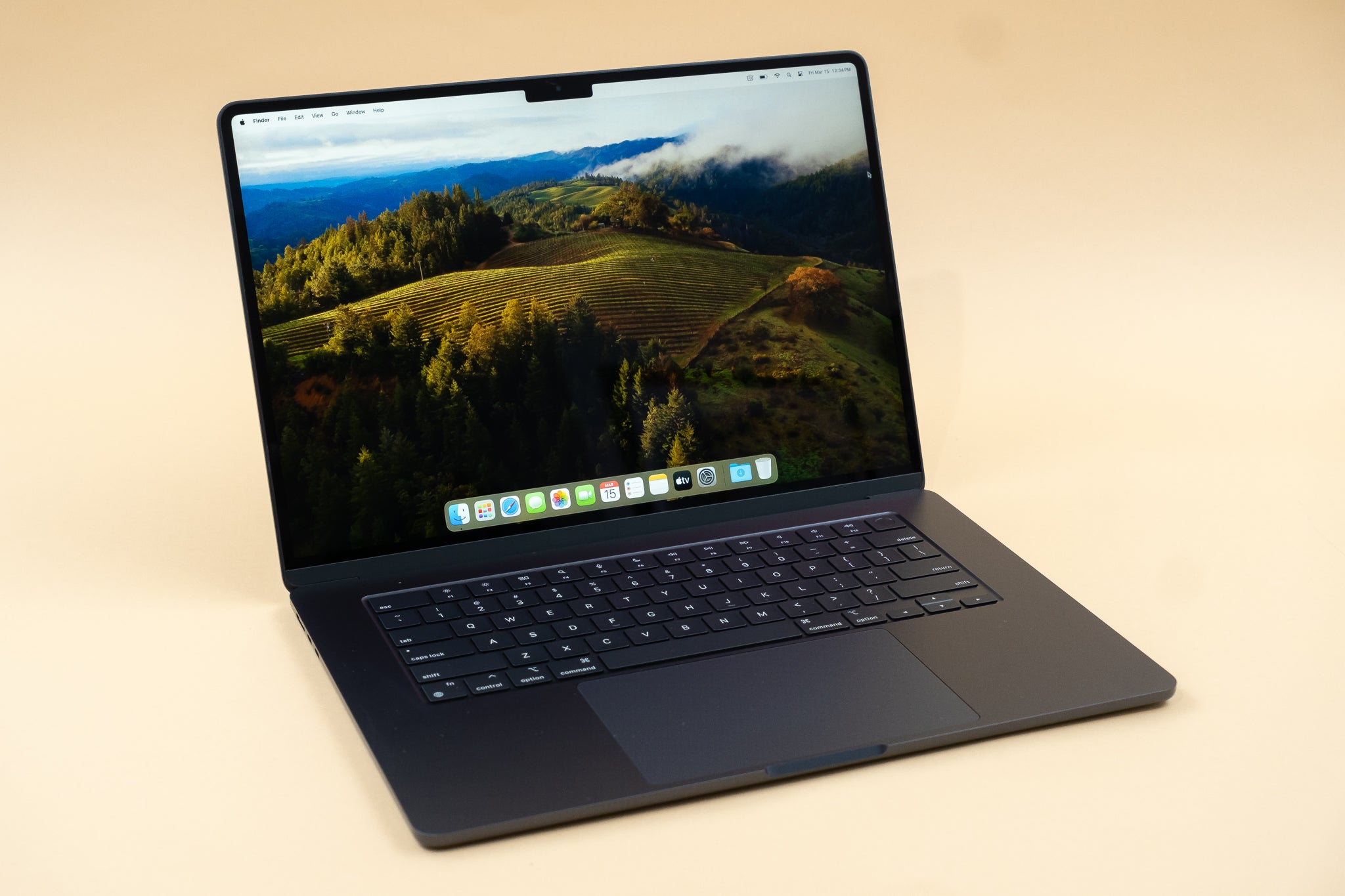
In 2023, Apple introduced the 15-inch MacBook Air, offering users a larger display option for the Air line while maintaining its lightweight appeal.
Key Innovations Over the Years
1. Retina Display: Set a new standard for laptop screens.
2. Apple Silicon: Revolutionary in processing power and energy efficiency.
3. Trackpad and Gestures: The MacBook’s multi-touch trackpad remains the gold standard.
4. Design Evolution: From polycarbonate to unibody aluminum, the MacBook is a design icon.
The MacBook Today
The MacBook lineup now includes:
• MacBook Air: Ultra-portable, powered by Apple Silicon, ideal for everyday users.
• MacBook Pro: A powerhouse for professionals, available with M2 Pro and M2 Max chips.
With each iteration, the MacBook continues to embody Apple’s philosophy of marrying form and function.
Conclusion
From its humble beginnings as a consumer-friendly laptop to its current status as a powerhouse for professionals, the MacBook has continually evolved to meet the needs of users. As technology advances, one can only imagine what the future holds for this iconic device.
Log in to comment on this blog.
Loading